NPCC Police Requirements (2026)Current
NPCC Police Requirements for Security Systems (2026)
Use a certified installer and an approved alarm receiving centre if you want police response.
What the NPCC police policy means for you →Established in Hull in 1992 — Fire & Security Systems Across Yorkshire, Lincolnshire & the Humber

Analogue telephone lines are being switched off across the UK. Alarms that still signal over them can lose their monitoring connection, and with it their police response.
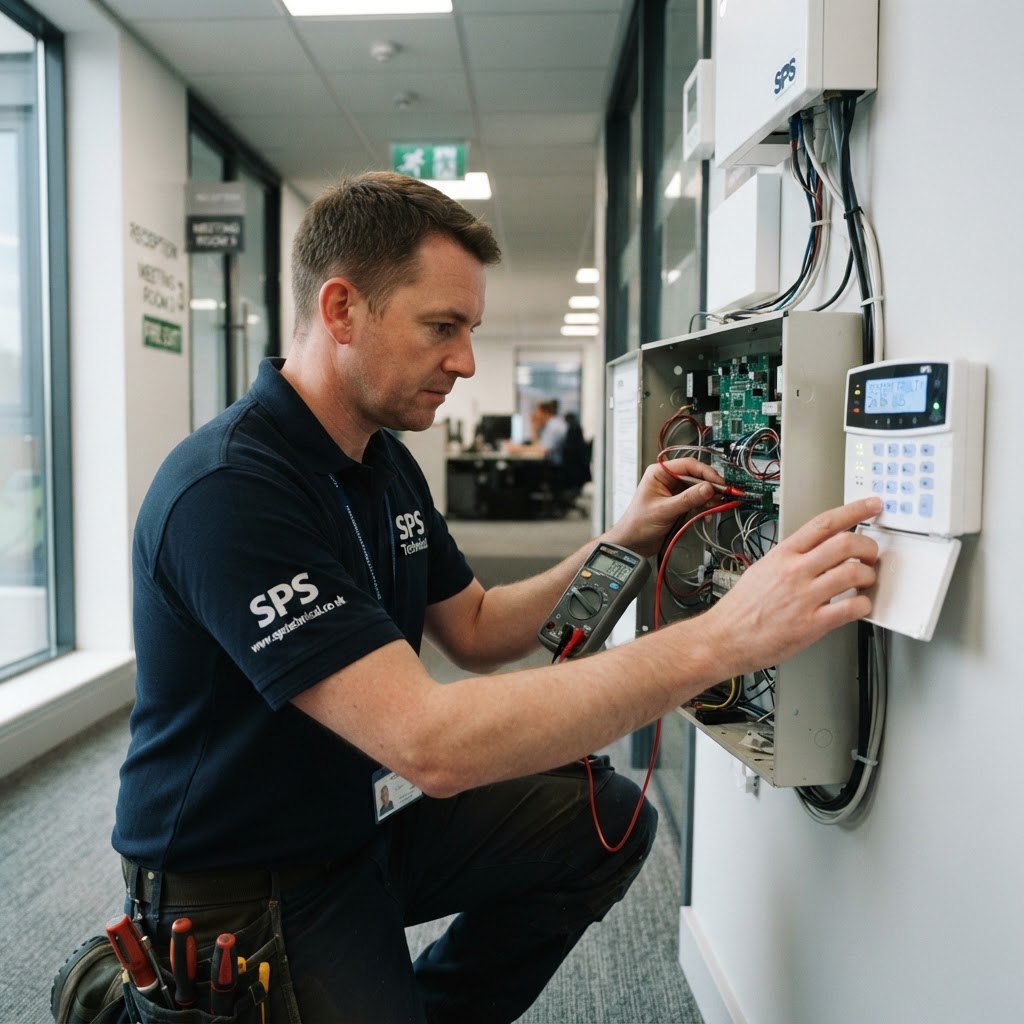
Openreach's analogue PSTN telephone network is being switched off across the UK — and any intruder alarm using a phone line to signal an Alarm Receiving Centre is at risk of losing its monitoring path. Over 51% of UK exchanges have already stopped new PSTN connections. When the line goes, the alarm still sounds locally, but no signal reaches the ARC, no keyholder is contacted and no police response is dispatched. Many businesses don't realise their monitoring has been affected until after an incident. SPS Technical audits existing signalling paths and migrates systems to IP or 4G dual-path signalling across Yorkshire, Lincolnshire and the Humber.
The problem
Openreach's switch-off of the analogue PSTN telephone network is already underway, with over 51% of UK exchanges now stopped for new PSTN connections. When the line goes, any intruder alarm using it to signal an Alarm Receiving Centre loses its monitoring path. The alarm still sounds locally — but no signal reaches the ARC, no keyholder is contacted, and no police response is dispatched. Many businesses don't know their signalling path has been affected until after an incident.
The PSTN switch-off is not a sudden event — it happens exchange by exchange, and many businesses only discover their monitoring has been affected when something goes wrong. The sequence of consequences is predictable and serious.
The PSTN switch-off
Is your alarm still monitoring?
Openreach's analogue telephone network switch-off is already underway. Any intruder alarm using a phone line to signal an Alarm Receiving Centre follows this path.
Risk indicators
If your intruder alarm uses a BT or analogue telephone line to contact your monitoring centre, or if your alarm panel has a built-in dialler rather than an IP or 4G communicator, your signalling path is at risk. SPS Technical can audit your existing setup and confirm whether a migration is needed.
The solution
In most cases, migration to IP or 4G dual-path signalling does not require replacing the entire alarm system. A new communicator is fitted to the existing panel, tested and registered with the ARC. The process is straightforward and causes minimal disruption to your monitoring coverage during the transition.
Signalling audit
We identify your current transmission path and check exchange status
Communicator selection
IP, 4G or dual-path communicator specified to EN50136
Installation
New communicator fitted to existing panel in most cases — no full system replacement needed
ARC reconnection
Monitoring restored and dual-path signalling confirmed
Compliance verification
EN50136 certificate issued, police URN status confirmed
Enter your postcode and current signalling type to get an initial indication of your alarm signalling risk from the PSTN switch-off. No account needed — results in under 2 minutes.
Takes 2 minutes — no account needed. Results are indicative only.
Standards that apply
The British Standards and laws we work to, in plain English. Each one links to a summary page with the current edition and the official source.
Use a certified installer and an approved alarm receiving centre if you want police response.
What the NPCC police policy means for you →Your intruder alarm should be designed to a security grade matched to your risk, usually Grade 2 or 3 for businesses.
What PD 6662 means for you →Book at least one maintenance visit a year for a bells-only alarm.
What BS 9263 means for you →Ask the Standards Library. Answers come only from our library and quote their sources.
Try one of these:
Answers come only from our standards library and quote their sources. They are general guidance, not advice for a specific building, and are produced automatically, so check the source before relying on them. Please don't include names or personal details in your question.
Editions checked 12 October 2026 by the SPS Technical team.
FAQs
Knowledge Centre
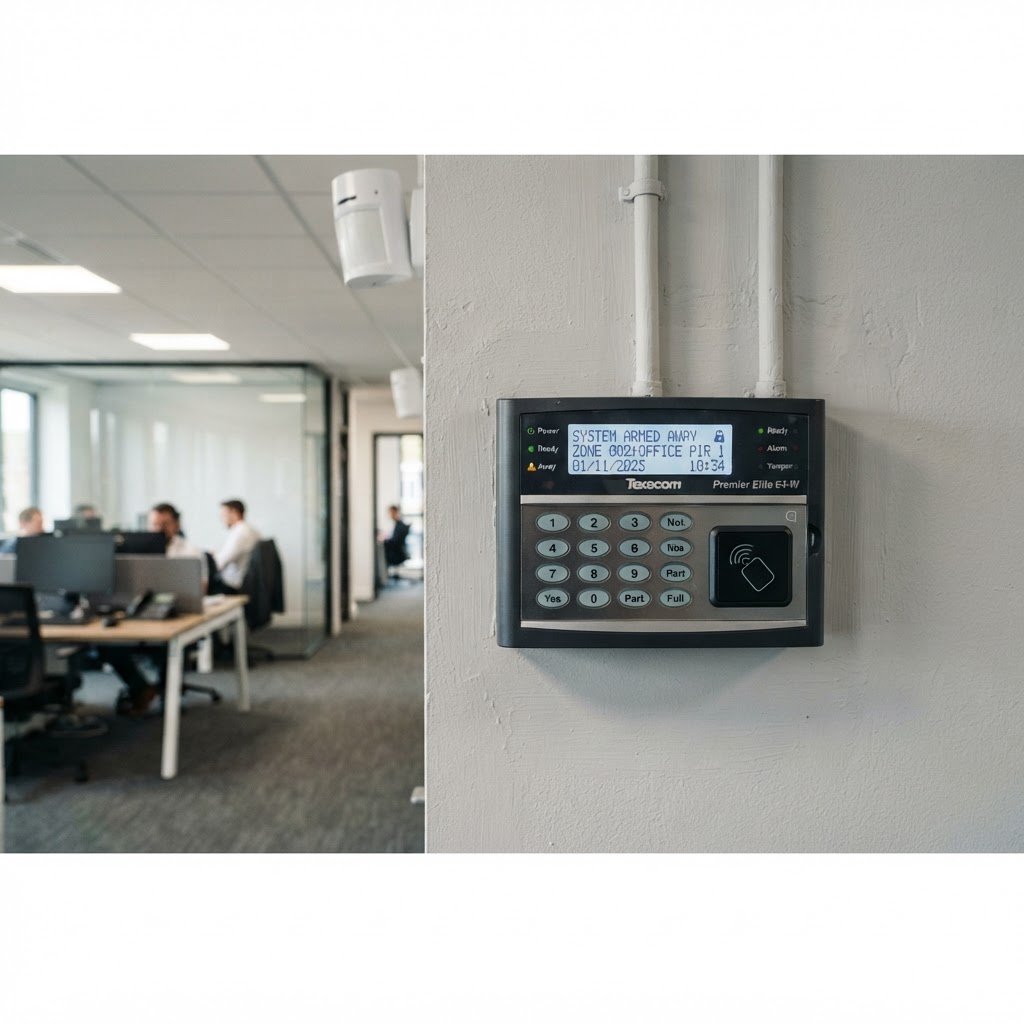
A practical guide to commercial intruder alarm faults, emergency repair, planned maintenance, signalling issues, system takeovers and reducing security downtime.
A practical guide for facilities managers on intruder alarm grades, monitoring, police response, SSAIB certification and lifecycle maintenance.
We'll check your current signalling path and advise on the migration options available.
Accreditations
Independently certified, working to British Standards. Check every accreditation on the official register.
Registration HUMB018
Intruder alarms to PD 6662, CCTV to SSAIB Code of Practice SS2003, access control to SS2002, and fire alarm systems
Verify at ssaib.orgCertificate 104302 · Organisation ID 303286
Fire alarm design, installation, commissioning and maintenance to BS 5839-1
Verify at bafe.org.uk1208-QMS-001 · 1208-EMS-001
Quality and environmental management, certified by Alcumus ISOQAR. ISO 9001 held since 1997
CHAS-0004703 · Constructionline 92018 · SafeContractor PE5040
SSIP health and safety approval, procurement registration and Paxton Gold Installer status
For intruder alarms, SPS Technical is an approved installer of police-response systems with the following forces, so your intruder alarm can be issued a police Unique Reference Number (URN) under the NPCC Police Requirements for Security Systems.
Police approval applies to intruder alarms only.
Since 1992
Established in Hull
1,750+
Systems maintained
2,850+
Scheduled service visits a year
4
Regional offices: Hull, Grimsby, Lincoln, Sheffield
Trusted across universities, NHS and healthcare, local authorities, schools and academy trusts, logistics and industrial sites, transport, and stadiums and venues.
Reviewed by the SPS Technical team · Last updated October 2026
Full accreditation details