PD 6662:2017Current
Intruder alarm grades and standards in the UK
Your intruder alarm should be designed to a security grade matched to your risk, usually Grade 2 or 3 for businesses.
What PD 6662 means for you →Established in Hull in 1992 — Fire & Security Systems Across Yorkshire, Lincolnshire & the Humber
Risk-assessed, graded intruder alarm design and installation for commercial and industrial premises across Yorkshire, Lincolnshire and the Humber.
SPS Technical is a commercial intruder alarm installer designing and installing graded systems for commercial and industrial premises across Yorkshire, Lincolnshire and the Humber. Every installation begins with a risk assessment that determines the correct grade under EN50131 and PD6662 — from Grade 2 for low-to-medium risk premises up to Grade 3 for higher-value commercial sites requiring confirmed alarm response and ARC monitoring. As an SSAIB certified installer, systems we install to the required standard can qualify for a police Unique Reference Number (URN) for police response.
Grading explained
Under EN50131 and PD6662, every intruder alarm must be graded to reflect the level of risk at the premises. The grade determines detector specification, panel capability, signalling requirements and ARC monitoring standards. Getting the grade wrong means either under-protecting your premises or paying for unnecessary capability — and insurers and police check compliance. SPS Technical carries out a full risk assessment before specifying any system.
Commercial intruder alarm systems
SSAIB intruder alarm installation — choosing the right EN50131 grade
Under EN50131 and PD6662, every intruder alarm must be graded to reflect the level of risk at the premises. The grade determines detector specification, panel capability, signalling requirements and ARC monitoring standards.
Grade 1
Low risk
Premises unlikely to attract targeted intruders. Opportunistic threat only. Rarely specified for standalone commercial premises.
Grade 2
Low to medium risk
Minimum standard accepted by most insurers for commercial premises. Assumes opportunistic intruder with basic tools.
Grade 3
Medium to high risk
Standard for most commercial premises with valuable stock or assets. Often required by insurers for higher-risk premises.
Grade 4
High risk
Very high value premises. Assumes planned attack and specialist knowledge. Intruder may attempt to tamper with the system itself.
Detection technology
Modern commercial intruder alarm systems use a combination of detection technologies to minimise false alarms while maintaining reliable detection. PIR detectors are the standard for most internal spaces. Dual-technology detectors combine PIR and microwave to reduce nuisance alarms in challenging environments. Door contacts, shock detectors and vibration detectors provide perimeter coverage. Grade 3 systems require detectors with anti-masking capability to prevent deliberate interference.
PIR detectors
Passive infrared movement detection, the standard for most commercial spaces
Dual-technology detectors
PIR plus microwave, reducing false alarms in challenging environments
Door and window contacts
Perimeter detection on all access points
Shock detectors
Glass break and impact detection for perimeter security
Vibration detectors
Structural attack detection for high-risk premises
CCTV-verified detection
Visual confirmation reducing false alarm callouts
Grade 3 systems require dual-path signalling to an Alarm Receiving Centre — two independent transmission routes so that a single path failure cannot prevent an alarm reaching the monitoring centre. SPS Technical installs IP and 4G dual-path signalling to EN50136 on all new Grade 3 systems. With the PSTN analogue telephone network being switched off across the UK, all new installations use IP or 4G signalling as standard.
Dual-path signalling
Grade 3 systems require dual-path signalling to an ARC — two independent transmission routes so that a single path failure doesn't prevent an alarm reaching the monitoring centre. SPS Technical installs IP and 4G dual-path signalling to EN50136, maintaining ARC connection and police response eligibility even if one path is disrupted. With the PSTN switch-off underway, all new installations use IP/4G signalling as standard.
Our process
Every SPS Technical intruder alarm installation follows a structured process from risk assessment through to SSAIB certification. No system is commissioned without full zone testing, entry/exit timing verification and ARC connection confirmation.
Risk assessment
Premises, contents, occupancy and threat level assessed
System design
Grade determined, detector placement and panel specified to EN50131/PD6662
Installation
Detectors, panel, sounders and signalling equipment installed
Commissioning
All zones tested, entry/exit timing configured, ARC connection established
Certification
SSAIB certificate of compliance issued, police URN applied for
Risk assessment
Premises, contents, occupancy and threat level assessed
System design
Grade determined, detector placement and panel specified to EN50131/PD6662
Installation
Detectors, panel, sounders and signalling equipment installed
Commissioning
All zones tested, entry/exit timing configured, ARC connection established
Certification
SSAIB certificate of compliance issued, police URN applied for
Standards that apply
The British Standards and laws we work to, in plain English. Each one links to a summary page with the current edition and the official source.
Your intruder alarm should be designed to a security grade matched to your risk, usually Grade 2 or 3 for businesses.
What PD 6662 means for you →The grade of your alarm system is defined here, from Grade 1 (low risk) to Grade 4 (high risk).
What BS EN 50131-1 means for you →Use a certified installer and an approved alarm receiving centre if you want police response.
What the NPCC police policy means for you →Ask the Standards Library. Answers come only from our library and quote their sources.
Try one of these:
Answers come only from our standards library and quote their sources. They are general guidance, not advice for a specific building, and are produced automatically, so check the source before relying on them. Please don't include names or personal details in your question.
Editions checked 12 October 2026 by the SPS Technical team.
FAQs
Knowledge Centre
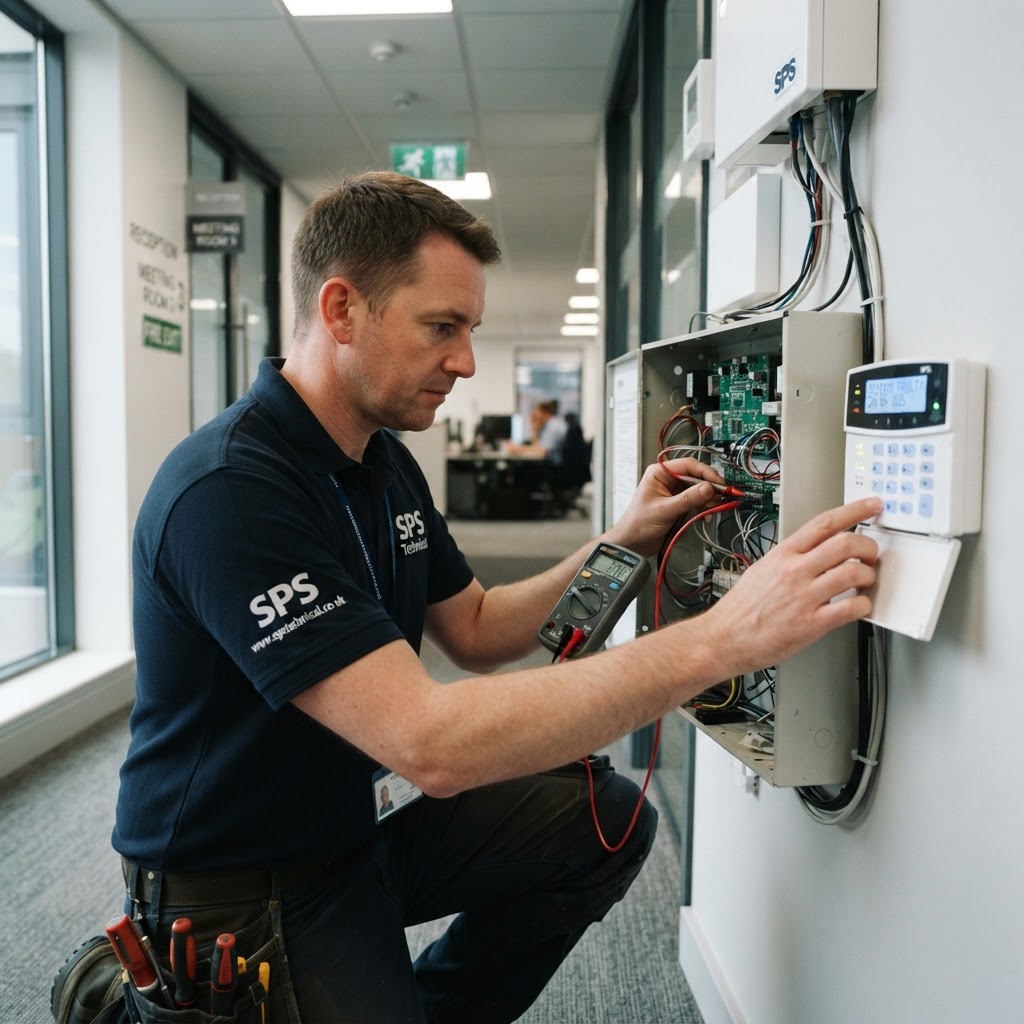
A practical guide to commercial intruder alarm faults, emergency repair, planned maintenance, signalling issues, system takeovers and reducing security downtime.
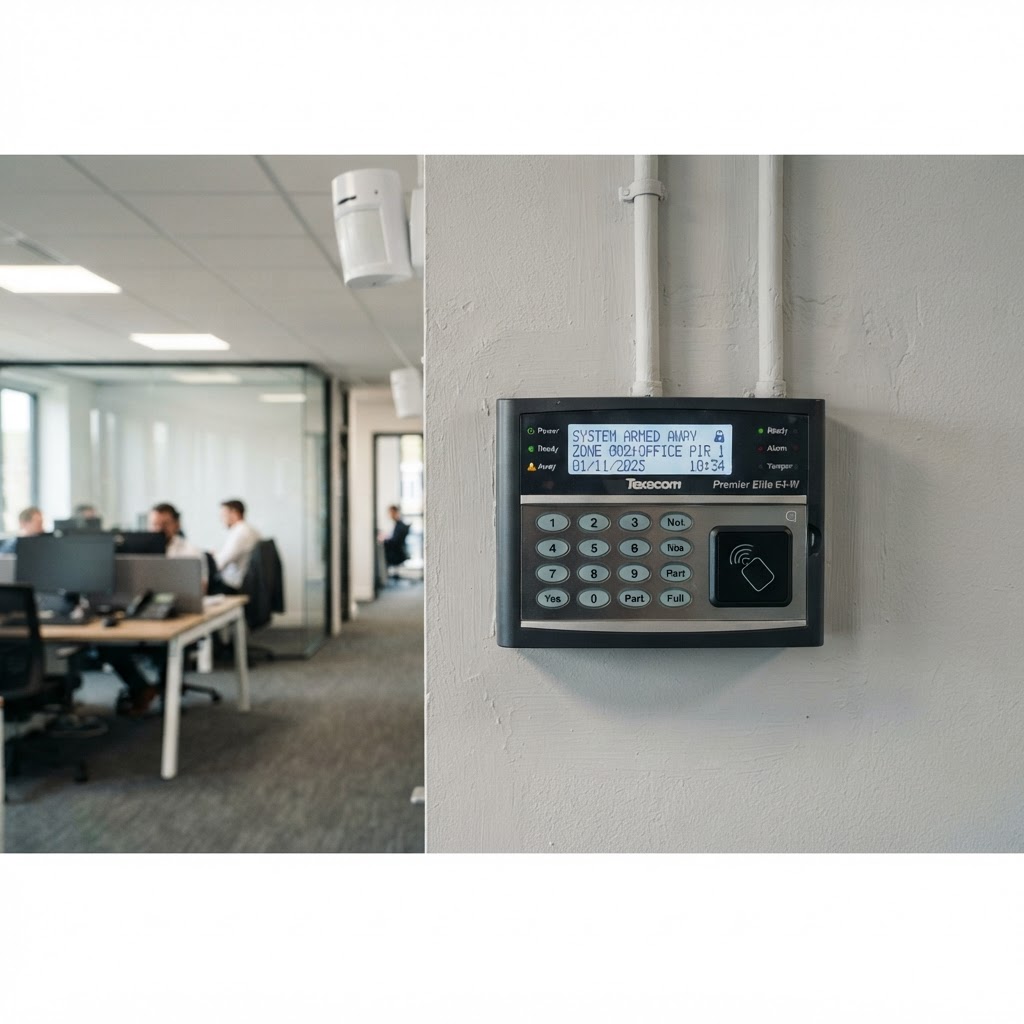
A practical guide for facilities managers on intruder alarm grades, monitoring, police response, SSAIB certification and lifecycle maintenance.
Risk assessment, system design and an itemised quote, with no obligation.
Accreditations
Independently certified, working to British Standards. Check every accreditation on the official register.
Registration HUMB018
Intruder alarms to PD 6662, CCTV to SSAIB Code of Practice SS2003, access control to SS2002, and fire alarm systems
Verify at ssaib.orgCertificate 104302 · Organisation ID 303286
Fire alarm design, installation, commissioning and maintenance to BS 5839-1
Verify at bafe.org.uk1208-QMS-001 · 1208-EMS-001
Quality and environmental management, certified by Alcumus ISOQAR. ISO 9001 held since 1997
CHAS-0004703 · Constructionline 92018 · SafeContractor PE5040
SSIP health and safety approval, procurement registration and Paxton Gold Installer status
For intruder alarms, SPS Technical is an approved installer of police-response systems with the following forces, so your intruder alarm can be issued a police Unique Reference Number (URN) under the NPCC Police Requirements for Security Systems.
Police approval applies to intruder alarms only.
Since 1992
Established in Hull
1,750+
Systems maintained
2,850+
Scheduled service visits a year
4
Regional offices: Hull, Grimsby, Lincoln, Sheffield
Trusted across universities, NHS and healthcare, local authorities, schools and academy trusts, logistics and industrial sites, transport, and stadiums and venues.
Reviewed by the SPS Technical team · Last updated October 2026
Full accreditation details