Local authority · Hull and East Yorkshire
Fire alarm modifications across public buildings
Upgrades across community centres, youth centres, day centres and sheltered housing, each with a BAFE modification certificate.
Established in Hull in 1992 — Fire & Security Systems Across Yorkshire, Lincolnshire & the Humber
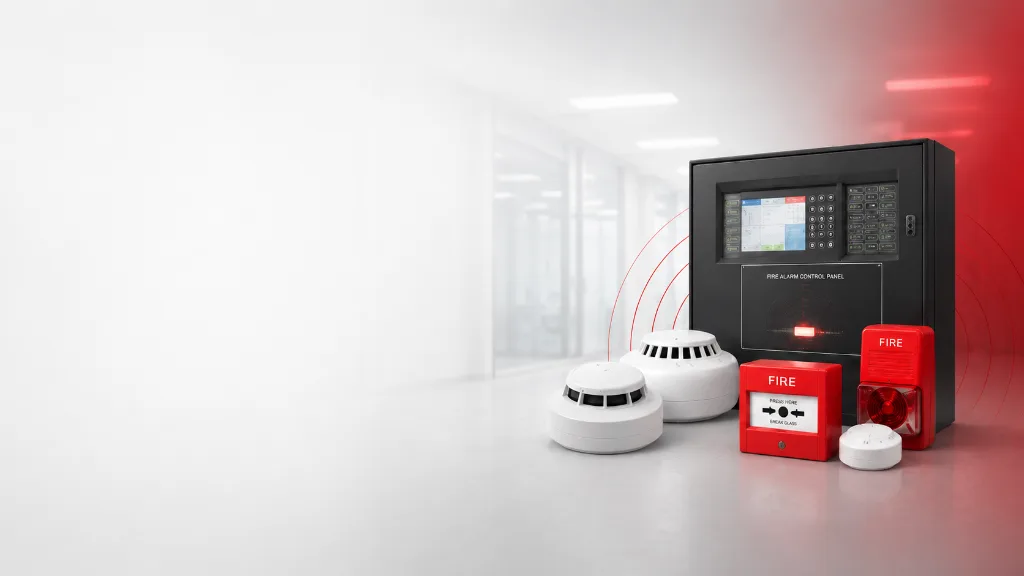
SPS Technical designs, installs, commissions and maintains fire detection and alarm systems for businesses, schools and public buildings across Yorkshire, Lincolnshire and the Humber, from our Hull head office. We work to BS 5839-1:2025 and are BAFE SP203-1 registered for design, installation, commissioning and maintenance, so every stage comes with the certificate to prove it.
1992
Established in Hull
500+
Systems maintained
BAFE
SP203-1 registered
24/7
Out-of-hours engineer
Quick answer
SPS Technical is a BAFE SP203-1 registered fire alarm company (104302) based in Hull, working to BS 5839-1:2025. It designs, installs, commissions and maintains conventional, addressable and wireless fire alarm systems for non-domestic premises, and takes over systems installed by others. Systems are serviced at least every six months, with a duty engineer for out-of-hours faults. Every stage is certificated: design, installation, commissioning, acceptance and maintenance.
Explore fire alarms
How we design a system
Categories, detector choice, sounder levels, battery standby and the paperwork, explained simply.
See how we designCategory finder
Answer a few questions and get an indicative L, P or M category to discuss at survey.
Find your categoryNew systems and upgrades, designed and certificated to BS 5839-1.
Find out moreSix-monthly servicing, out-of-hours callout and a certificate after every visit.
Find out moreWe audit, rebuild missing records and maintain systems we didn't install.
Find out moreEvery activation logged and followed up, with root-cause fixes rather than resets.
Find out moreOur record
Figures from our own BAFE maintenance and callout records.
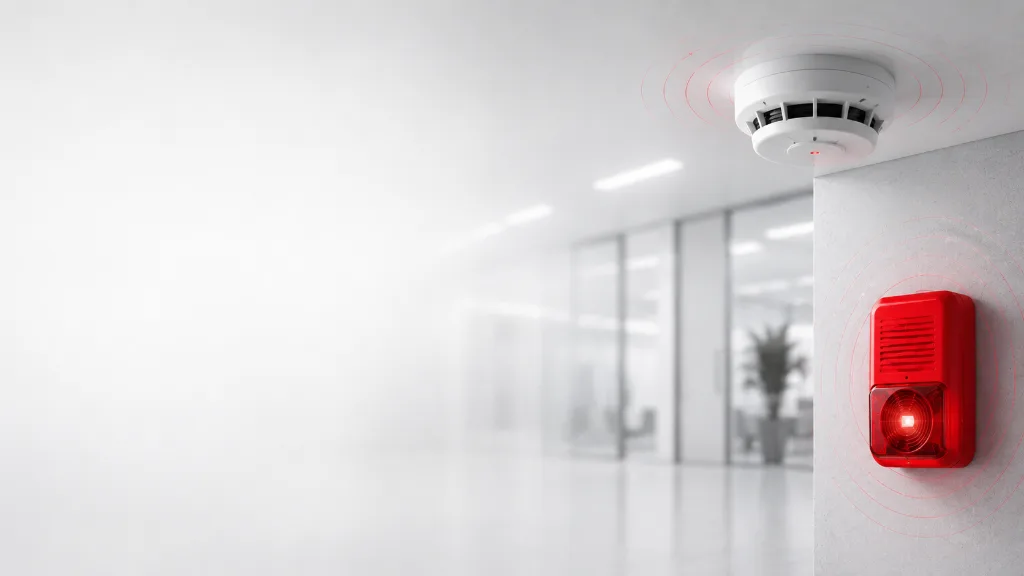
500+
Fire alarm systems on planned maintenance
1,000+
Routine service visits a year, 100% completed on time
400+
Callouts a year, every one within our response target
~1h 10m
Average callout response time
Every fire alarm activation is followed up. The monitoring centre's daily activation report is checked each day, every activation is logged and followed up, and the figures are reviewed at our monthly management meeting.
Recent fire alarm projects
Described by sector and region only. We never publish client names, sites or system layouts.
Local authority · Hull and East Yorkshire
Upgrades across community centres, youth centres, day centres and sheltered housing, each with a BAFE modification certificate.
Education · Yorkshire and beyond
Fire alarm servicing and changes across primary schools and academies, worked around the school day.
Industry and logistics · Yorkshire
High-level detector access and cause-and-effect testing on large industrial fire alarm systems.
Handover
Every stage is certificated, so you can show your insurer, auditor or fire officer the system was done properly.
Your responsibilities
Under the Regulatory Reform (Fire Safety) Order 2005, the person in control of the premises must keep the fire alarm working. In practice that means:
We give you a logbook and show your team how to do the weekly test at handover.
Free tools
No account needed. Results are indicative only.
A short self-assessment of testing, servicing, records and false alarms.
Start the toolWhich category, M, L1 to L5, P1 or P2, may suit your building.
Start the toolWhat unwanted fire signals could be costing your organisation.
Start the toolStandards that apply
The British Standards and laws we work to, in plain English. Each one links to a summary page with the current edition and the official source.
Have your system serviced by a competent person at least every six months.
What BS 5839-1 means for you →Know who the Responsible Person is for each of your premises.
What the Fire Safety Order means for you →Check your fire risk assessment or the landlord's duty to confirm which grade and category your property needs.
What BS 5839-6 means for you →Any access-controlled door on an escape route should release automatically when the fire alarm operates.
What BS 7273-4 means for you →Ask the Standards Library. Answers come only from our library and quote their sources.
Try one of these:
Answers come only from our standards library and quote their sources. They are general guidance, not advice for a specific building, and are produced automatically, so check the source before relying on them. Please don't include names or personal details in your question.
Editions checked 12 October 2026 by the SPS Technical team.
FAQs
Guides
SPS Security, our sister company, provides key holding, 24/7 alarm response, mobile patrols and guarding, so the same group maintains your system and sends an officer.
Regional coverage
SPS Technical supports commercial and public-sector sites from our Hull head office and regional offices in Grimsby, Lincoln and Sheffield, with planned coverage across the wider region.
Knowledge Centre

A practical guide to commercial fire alarm monitoring: how ARC signalling works, when monitoring may be appropriate, response arrangements, testing and maintenance.

A practical guide to commercial fire alarm beeping, panel faults, detector chirps and warning conditions — including when to call an engineer.

A practical guide to commercial fire alarm testing frequency, including weekly user checks, professional servicing intervals, logbooks and BS 5839-1 maintenance.
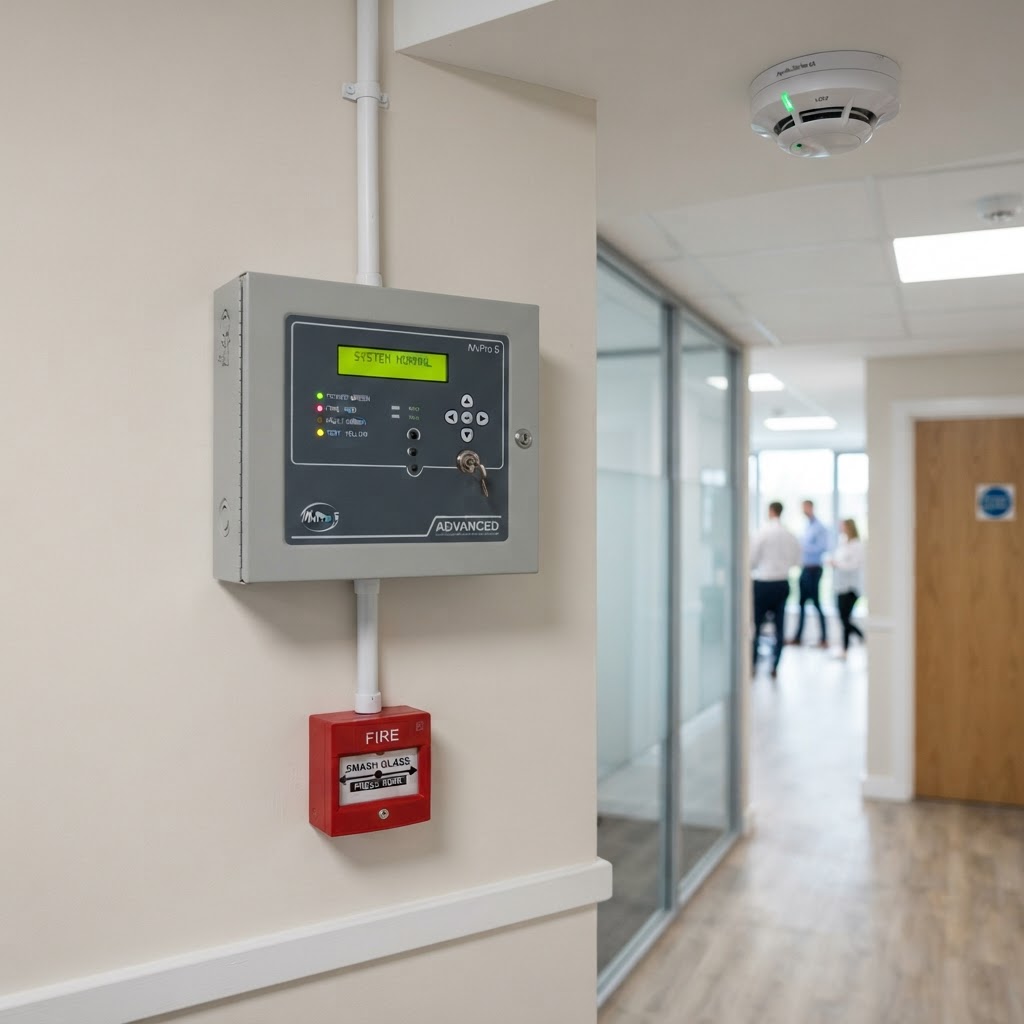
A practical 2026 guide for responsible persons, facilities managers and building owners on Fire Safety Order duties and maintaining compliant fire systems.
Book a free survey for a new system, an upgrade or a maintenance takeover.
Accreditations
Independently certified, working to British Standards. Check every accreditation on the official register.
Registration HUMB018
Intruder alarms to PD 6662, CCTV to SSAIB Code of Practice SS2003, access control to SS2002, and fire alarm systems
Verify at ssaib.orgCertificate 104302 · Organisation ID 303286
Fire alarm design, installation, commissioning and maintenance to BS 5839-1
Verify at bafe.org.uk1208-QMS-001 · 1208-EMS-001
Quality and environmental management, certified by Alcumus ISOQAR. ISO 9001 held since 1997
CHAS-0004703 · Constructionline 92018 · SafeContractor PE5040
SSIP health and safety approval, procurement registration and Paxton Gold Installer status
For intruder alarms, SPS Technical is an approved installer of police-response systems with the following forces, so your intruder alarm can be issued a police Unique Reference Number (URN) under the NPCC Police Requirements for Security Systems.
Police approval applies to intruder alarms only.
Since 1992
Established in Hull
1,750+
Systems maintained
2,850+
Scheduled service visits a year
4
Regional offices: Hull, Grimsby, Lincoln, Sheffield
Trusted across universities, NHS and healthcare, local authorities, schools and academy trusts, logistics and industrial sites, transport, and stadiums and venues.
Reviewed by the SPS Technical team · Last updated October 2026
Full accreditation details