BS 5839-1:2025Current
Fire alarm systems in non-domestic buildings
Have your system serviced by a competent person at least every six months.
What BS 5839-1 means for you →Established in Hull in 1992 — Fire & Security Systems Across Yorkshire, Lincolnshire & the Humber
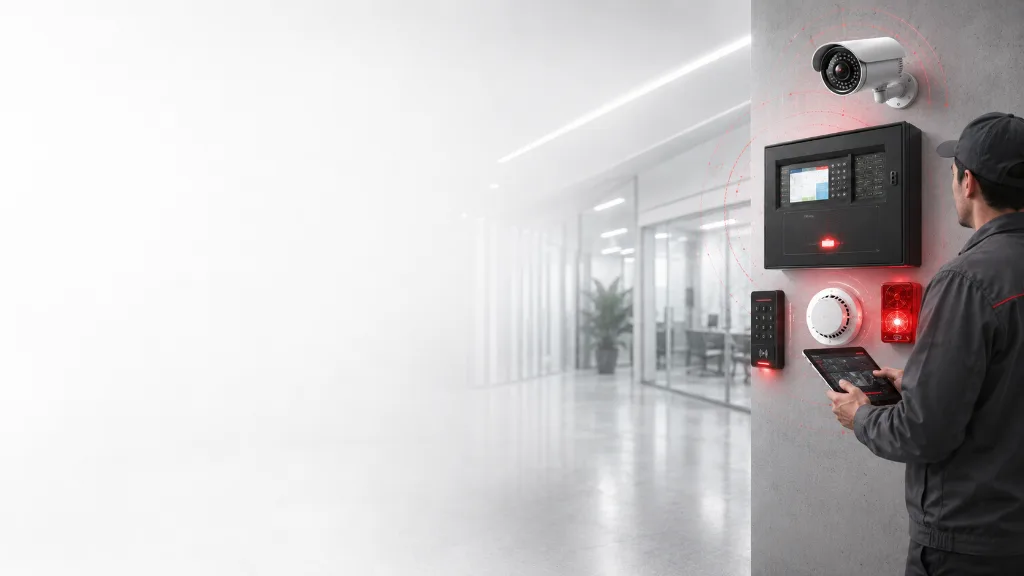
Persistent nuisance alarms investigated, diagnosed and resolved to BS 5839-1. Every activation on our monitored systems is logged and followed up.
Persistent fire alarm false alarms are more than a nuisance. They erode confidence in the system, desensitise staff to real alarms, can lead to fire service attendance charges, and can mean your local fire and rescue service stops attending automatic alarms at your premises. The root cause of almost every false alarm is a design, installation or maintenance problem that can be identified and resolved. SPS Technical's FIA-trained engineers investigate, diagnose and fix the underlying cause — not just reset the panel.
A single false alarm is an inconvenience. A persistent pattern is a serious safety and commercial risk. Staff who have evacuated unnecessarily multiple times begin to hesitate or ignore alarms — which is precisely the behaviour that costs lives in a real fire. Understanding and interrupting the escalation pattern is the first step in resolving a persistent false alarm problem.
Persistent false alarms are more than a nuisance. They erode confidence in the system, desensitise staff to real alarms, can mean your local fire and rescue service stops attending automatic alarms, and can lead to attendance charges. They almost always indicate a design, installation or maintenance problem — not an inevitable feature of a fire alarm system.
Premises with persistent false alarms can have automatic fire brigade response withdrawn
Repeated false alarms cause staff to ignore or delay evacuation on real activations
Fire services charge for repeated attendance at premises with persistent false alarms
How false alarms escalate
Left unaddressed, persistent false alarms follow a predictable and costly pattern.
Root causes
False alarms are almost always caused by the wrong detector in the wrong environment, poor detector placement, sensitivity drift from accumulated contamination, or a system that hasn't been reconfigured following a change in building use. Each of these has a specific technical solution — and each requires investigation rather than guesswork.
Ionisation detectors near kitchens, optical detectors in dusty environments, steam detectors near showers
Too close to air conditioning outlets, cooking equipment or high-traffic dust sources
Detectors accumulating contamination over time, lowering the activation threshold
System designed for an office now used as a workshop, kitchen or storage area
Cause-and-effect not matched to the building's evacuation strategy
Steam, dust, fumes or insects triggering detectors not rated for the environment
Our approach
SPS Technical's false alarm investigation service begins with a thorough review of the panel event log and alarm history. Our FIA-trained engineers then inspect the affected areas, assess detector types and placement, review cause-and-effect configuration and identify the specific root cause. Remediation is agreed and costed before any work begins, and every later activation is logged and followed up to confirm the problem has been resolved.
Panel event log and alarm history analysed. Frequency, timing, zones and device types mapped.
FIA-trained engineer inspects affected detectors, reviews placement, environmental conditions and configuration.
Specific cause identified — detector type, placement, sensitivity, environment or system configuration.
Detector replacement, repositioning, sensitivity adjustment, re-zoning or cause-and-effect reconfiguration carried out.
Full cause-and-effect test after remediation, then every later activation logged and followed up to confirm the false alarm rate has reduced.
Each fire and rescue service sets its own policy on unwanted fire signals. Many no longer send an engine to an automatic fire alarm at some premises unless a fire is confirmed, and some charge for repeated attendances. SPS Technical's false alarm investigation produces documented evidence of the root cause and the remedial work, which helps when you discuss attendance with your fire and rescue service.
Root cause investigation and documented remediation, so the alarms stop rather than just being reset.
Standards that apply
The British Standards and laws we work to, in plain English. Each one links to a summary page with the current edition and the official source.
Have your system serviced by a competent person at least every six months.
What BS 5839-1 means for you →Know who the Responsible Person is for each of your premises.
What the Fire Safety Order means for you →Ask the Standards Library. Answers come only from our library and quote their sources.
Try one of these:
Answers come only from our standards library and quote their sources. They are general guidance, not advice for a specific building, and are produced automatically, so check the source before relying on them. Please don't include names or personal details in your question.
Editions checked 12 October 2026 by the SPS Technical team.
Knowledge Centre

A practical guide to commercial fire alarm monitoring: how ARC signalling works, when monitoring may be appropriate, response arrangements, testing and maintenance.

A practical guide to commercial fire alarm beeping, panel faults, detector chirps and warning conditions — including when to call an engineer.

A practical guide to commercial fire alarm testing frequency, including weekly user checks, professional servicing intervals, logbooks and BS 5839-1 maintenance.
Accreditations
Independently certified, working to British Standards. Check every accreditation on the official register.
Registration HUMB018
Intruder alarms to PD 6662, CCTV to SSAIB Code of Practice SS2003, access control to SS2002, and fire alarm systems
Verify at ssaib.orgCertificate 104302 · Organisation ID 303286
Fire alarm design, installation, commissioning and maintenance to BS 5839-1
Verify at bafe.org.uk1208-QMS-001 · 1208-EMS-001
Quality and environmental management, certified by Alcumus ISOQAR. ISO 9001 held since 1997
CHAS-0004703 · Constructionline 92018 · SafeContractor PE5040
SSIP health and safety approval, procurement registration and Paxton Gold Installer status
For intruder alarms, SPS Technical is an approved installer of police-response systems with the following forces, so your intruder alarm can be issued a police Unique Reference Number (URN) under the NPCC Police Requirements for Security Systems.
Police approval applies to intruder alarms only.
Since 1992
Established in Hull
1,750+
Systems maintained
2,850+
Scheduled service visits a year
4
Regional offices: Hull, Grimsby, Lincoln, Sheffield
Trusted across universities, NHS and healthcare, local authorities, schools and academy trusts, logistics and industrial sites, transport, and stadiums and venues.
Reviewed by the SPS Technical team · Last updated October 2026
Full accreditation details