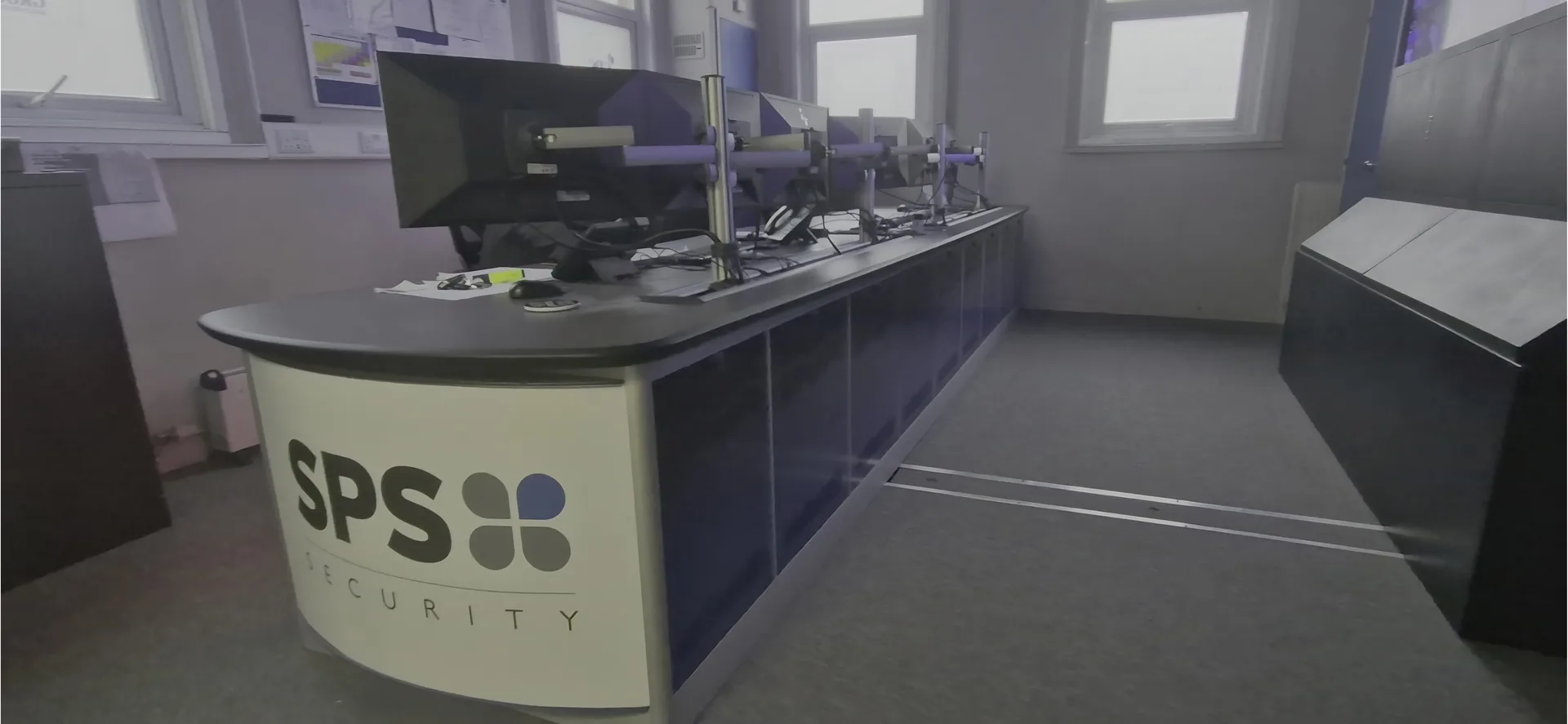
Traditional CCTV is often used to answer a question after an incident:
What happened?
Active CCTV monitoring is designed to ask a more useful question:
What is happening now, and what should we do about it?
For commercial premises, this can turn CCTV from a largely evidential system into part of an active security response.
Cameras can be combined with video analytics, perimeter detection, alarm inputs and remote monitoring so that suspicious activity generates an event for assessment. A trained operator can then review the relevant images and follow an agreed response procedure — which might include an audio warning, contacting a keyholder or security team, dispatching a response resource, or escalating a verified incident through an appropriate route.
That does not mean somebody has to watch every camera continuously.
A well-designed active monitoring system is usually event-led: technology identifies activity that meets defined rules, then people assess the event and decide what happens next.
For facilities and security managers, the value is not simply "more CCTV". It is creating a clear chain:
Detect → Verify → Intervene → Escalate → Record → Review
This guide explains how active CCTV monitoring works, where it can add value, how it can integrate with intruder alarms and access control, and the privacy and operational questions businesses should consider before deploying it.
Important: CCTV monitoring should be designed around a defined security purpose and operated in accordance with applicable data-protection law. The appropriate technical and response arrangements depend on the premises, risk, monitoring model and intended outcome.
What is active CCTV monitoring?
Active CCTV monitoring — also described as remote CCTV monitoring, monitored CCTV or remote video surveillance — combines cameras with a process for detecting, reviewing and responding to events.
The important word is active.
A conventional recording system may capture an intruder entering a yard at 2am and provide useful footage the following morning.
An actively monitored system is intended to identify relevant activity while it is taking place and put that information in front of someone who can assess it.
A typical solution can include:
- fixed or PTZ CCTV cameras;
- network video recorders or video management systems;
- video analytics;
- virtual tripwires or protected zones;
- external detection;
- intruder alarm inputs;
- secure communications;
- a remote monitoring facility;
- operator verification;
- audio challenge equipment;
- keyholding or security response; and
- an agreed escalation procedure.
Not every site needs every element.
The design should start with the threat and required response.
How does active CCTV monitoring work?
Although platforms differ, the underlying workflow can be understood in six stages.
1. Detect
The system identifies activity that matches a defined event.
For example:
- a person enters a protected yard after hours;
- movement crosses a virtual perimeter;
- somebody remains in a restricted zone;
- an intruder alarm detector activates;
- a door is forced;
- an external detector is triggered; or
- another security system generates an event.
Modern analytics can help distinguish between different types of movement, but analytics should support the security strategy rather than dictate it.
2. Present the event
Instead of asking an operator to stare continuously at dozens or hundreds of cameras, the system presents the relevant event and associated camera views.
This can include:
- live video;
- pre-event footage;
- event location;
- associated cameras;
- alarm information; and
- site instructions.
Good configuration gives the operator context quickly.
3. Verify
The operator assesses what is happening.
They may need to distinguish between:
- an intruder;
- authorised staff;
- a contractor;
- an animal;
- weather-related movement;
- a delivery;
- an innocent passer-by; or
- a technical false activation.
This human verification layer is one of the key differences between simple motion alerts and a managed monitoring service.
4. Intervene
Where the system and site procedure allow it, an operator may be able to intervene remotely.
A common example is audio challenge.
A live announcement can make the person aware that they have been detected and that the site is being monitored.
For some opportunistic intrusions, early intervention may encourage the person to leave before the incident develops further.
5. Escalate
If the event appears genuine or meets an agreed trigger, the operator follows the site's escalation procedure.
That might include:
- contacting a nominated site representative;
- contacting a professional keyholder;
- dispatching a security response;
- escalating to an emergency service where appropriate; or
- following another site-specific instruction.
The important point is that the response is pre-agreed.
A sophisticated camera system has limited value if nobody has decided what should happen when it identifies a real threat.
6. Record and review
The event, operator actions and relevant footage can provide an audit trail.
For facilities and security managers, this information can be valuable for:
- incident investigation;
- identifying repeated vulnerabilities;
- reviewing false activations;
- adjusting detection zones;
- improving site procedures; and
- demonstrating how security events were handled.
SPS Technical view: design backwards from the response
The first question should not be "How many cameras do we need?"
Start with: What event are we trying to detect, and what should happen when we detect it?
A camera looking across a yard may be excellent for evidence but poor for early detection. Another camera position, combined with the right analytics and response procedure, may provide much greater operational value.
Monitoring works best when detection, image quality, communications and response have been designed as one system.
Active CCTV monitoring vs recorded CCTV
Both approaches have value, but they solve different problems.
Recorded CCTVActive CCTV monitoringPrimarily provides evidence and reviewDesigned to support action during an eventIncident may only be discovered laterEvent can be raised while activity is occurringRelies heavily on later footage searchRelevant cameras can be presented automaticallyNo inherent response processCan use a defined escalation procedureUseful for investigationUseful for detection, verification and investigationOften locally managedCan be remotely managed outside operating hours
This does not mean recorded CCTV is obsolete.
Most actively monitored systems also record footage. The difference is that monitoring adds a live operational layer.
Does someone watch CCTV cameras 24 hours a day?
Not necessarily.
This is one of the biggest misconceptions about remote CCTV monitoring.
Traditional control-room surveillance can involve operators actively observing camera displays. But many modern commercial monitoring solutions use an event-driven model.
Analytics or detection technology identifies activity and raises an event. The operator then reviews the relevant cameras.
This can be more practical than expecting someone to continuously observe every image from a large estate.
It also changes how a system should be designed.
If a camera is part of an event-led monitoring strategy, the facilities manager needs to understand:
- what triggers the event;
- when the monitoring rules apply;
- what area is being protected;
- how the operator receives the event;
- what images are available for verification; and
- what response instruction is attached to it.
What can CCTV analytics detect?
The exact capabilities depend on the platform and camera technology.
Common analytics can include detection of:
- people;
- vehicles;
- movement across a virtual line;
- entry into a defined area;
- direction of travel;
- loitering or dwell time;
- objects in particular zones; and
- other configured events.
More advanced technologies can offer additional classification and search capabilities.
However, the fact that a system can process information does not automatically mean it should.
The ICO stresses that surveillance should be designed for a specific purpose and that organisations should process only the personal data needed to achieve that purpose.
That is particularly important when considering more intrusive functions such as biometric identification or audio recording.
Why image quality matters more than camera resolution alone
"4K" is not a security outcome.
A high-resolution camera can still produce poor operational evidence if:
- the subject is too far away;
- the lens is wrong;
- lighting is poor;
- the camera is badly positioned;
- the view is obstructed;
- bandwidth is insufficient;
- compression is excessive; or
- the image does not show the detail required for the task.
The starting point should be the purpose of each camera.
Do you need to:
- detect that a person is present?
- observe activity?
- recognise somebody known to the organisation?
- obtain detail suitable for identification?
- read a vehicle registration?
- verify an alarm?
- monitor a gate or loading bay?
The ICO similarly says surveillance information should be of suitable quality to meet the purpose for which the system was installed.
This is why CCTV design should be based on the operational requirement rather than simply choosing the highest megapixel count.
Where does active CCTV monitoring work particularly well?
Remote monitoring can be valuable where sites have predictable periods of vulnerability and where early detection creates time to act.
Warehouses and distribution centres
Typical risks can include:
- perimeter intrusion;
- loading-bay access;
- vehicle yards;
- theft of stock;
- fuel theft;
- trailer crime; and
- unauthorised access outside operating hours.
CCTV analytics can help protect external areas before an intruder reaches the building.
Manufacturing and industrial sites
Industrial premises often combine large perimeters, valuable plant and periods of low occupancy.
Monitoring can provide an additional layer around:
- compounds;
- plant areas;
- storage yards;
- gates;
- external equipment; and
- isolated buildings.
Construction and temporary sites
Changing layouts and exposed equipment can make construction environments difficult to secure.
A properly designed monitoring solution can support temporary or evolving detection strategies, although camera positions and analytics may need regular review as the site changes.
Offices and business parks
Monitoring can support:
- out-of-hours perimeter security;
- entrances;
- car parks;
- plant areas; and
- restricted zones.
Retail and commercial estates
For larger estates, remote monitoring can provide a centralised view of events across multiple locations rather than requiring every site to operate its own security control room.
CCTV monitoring and intruder alarms work well together
CCTV and intruder alarms are often treated as separate procurement exercises.
They can be considerably more useful when designed together.
An intruder alarm is effective at generating an alarm event. CCTV can provide visual context.
For example:
Intruder detector activates
↓
Associated cameras are presented
↓
Operator reviews live and pre-event footage
↓
Event is assessed
↓
Agreed response follows
This can help distinguish a genuine intrusion from an environmental or accidental activation.
It can also provide much better information to the person responding.
Instead of receiving:
"The warehouse alarm has gone off."
the response process can potentially receive:
"A person has entered the rear compound and is moving towards loading bay three."
That is a materially different security outcome.
CCTV monitoring and access control
Access control provides another useful source of context.
An integrated approach can help facilities teams understand whether activity is authorised.
Examples might include:
- a door forced without a valid access event;
- access granted outside expected hours;
- a restricted door held open;
- an alarm event associated with a particular entrance; or
- video presented alongside an access-control event.
Again, integration should serve a defined operational purpose.
Connecting systems because the technology allows it is not the same as designing a useful security workflow.
Remote audio challenge: can an operator speak to an intruder?
Some monitored CCTV systems can use speakers or other audio equipment to deliver a live or pre-recorded warning.
A remote operator might challenge a person after verifying suspicious activity.
This can provide three advantages:
- It demonstrates that the site is actively monitored.
- It can interrupt an incident early.
- It may allow escalation to begin before entry or damage progresses.
However, audio functionality requires careful design and governance.
The ICO identifies audio recording as particularly intrusive and says organisations need to consider the data-protection implications of functions such as audio recording, live streaming and cloud storage.
An audio challenge is also not necessarily the same thing as continuously recording conversations. The exact functionality and data processing should be understood and documented.
What happens after a CCTV operator verifies an intrusion?
The answer should already exist in the site's response plan.
Possible actions can include:
Audio intervention
The operator issues an appropriate warning.
Keyholder contact
A nominated person is informed.
Professional security response
A trained mobile response officer or other agreed resource attends.
Site-team escalation
On occupied sites, security or management personnel may be directed to respond according to site procedures.
Emergency-service escalation
Where circumstances justify it and the monitoring/service arrangements support it, the event may be escalated through the appropriate emergency route.
No supplier should imply that every camera activation automatically generates police attendance.
The escalation route depends on the type of system, verification, monitoring arrangements, applicable standards and the circumstances of the event.
Why keyholding and response should be designed with the monitoring
Monitoring detects and verifies. Someone may still need to physically attend.
A response can be required to:
- inspect the premises;
- provide access;
- liaise with emergency services;
- arrange boarding or repairs;
- reset security systems;
- secure damaged doors; or
- confirm that the site can safely return to normal.
If the response plan depends entirely on a manager driving to site in the middle of the night, ask whether that is genuinely resilient.
A professional keyholding and alarm-response arrangement can provide a defined operational endpoint to the monitoring process.
For SPS Group customers, this creates a useful opportunity to design the technical detection and operational response together, rather than buying them as disconnected services.
Can active CCTV reduce the need for manned guarding?
Sometimes — but it should not be presented as a universal replacement.
The better question is:
Which security tasks require a person physically on site, and which can be delivered more effectively through technology and remote response?
A security review might find that:
- a full-time guarding presence remains necessary;
- monitoring can protect vulnerable areas outside staffed hours;
- CCTV can support a smaller on-site team;
- remote verification can improve a mobile response model; or
- a hybrid arrangement provides better coverage for the available budget.
For facilities managers, this is where active monitoring can become a security-efficiency tool, not simply another piece of equipment.
Example: hybrid security
A site currently uses guarding throughout the night.
A review identifies that the primary out-of-hours duties are:
- monitoring a perimeter;
- checking two loading bays;
- responding to occasional alarms; and
- carrying out scheduled patrols.
Rather than assuming the guarding hours must remain unchanged forever, the organisation could assess whether:
- analytics provide continuous perimeter detection;
- CCTV provides verification;
- audio challenge provides early intervention;
- a mobile officer provides physical response; and
- scheduled or exception-based patrols address the remaining physical tasks.
The correct answer depends on the risk. The objective is not to remove people; it is to deploy people and technology where each adds the most value.
Active monitoring across a multi-site estate
Remote CCTV becomes particularly interesting for organisations managing several premises.
Instead of each site operating independently, a central monitoring model can create consistency.
Facilities and security managers can begin to measure:
- alarm events by site;
- verified incidents;
- false or nuisance activations;
- response actions;
- response times;
- repeat hotspots;
- camera faults;
- communication failures; and
- trends by time and location.
That data can then inform security investment.
If one site generates repeated perimeter events while another generates almost none, the next security budget does not have to be divided equally.
Investment can follow the evidence.
SPS Technical view: monitoring should generate management information
The value of monitoring should not stop when an incident is closed.
Event data can show where a site is vulnerable, which detection rules create nuisance activations and where response arrangements need improvement.
Across an estate, this can help facilities managers move from reactive security spending to evidence-led lifecycle planning.
CCTV monitoring and UK data-protection law
CCTV images of identifiable people are likely to be personal data.
Organisations operating video surveillance therefore need to consider the UK GDPR, Data Protection Act 2018 and current ICO guidance.
The ICO's current guidance says organisations using surveillance systems that process identifiable individuals' personal data need to comply with UK data-protection law.
The technology may be sophisticated, but the principles are straightforward.
Have a defined purpose
Be clear why CCTV is required.
Examples might include:
- prevention and detection of crime;
- protection of staff;
- security of premises;
- protection of assets; or
- management of a specific security risk.
"Because we can" is not a purpose.
Establish a lawful basis
The ICO says organisations need to identify and document a lawful basis under Article 6 UK GDPR. For many private organisations, legitimate interests may be relevant, depending on the circumstances.
Use only what is necessary
Camera coverage and system functionality should be proportionate to the objective.
The ICO emphasises that personal data should be adequate, relevant and limited to what is necessary.
Be transparent
People should know that surveillance is taking place.
The ICO recommends prominent signage before people enter the camera's field of vision, supported by appropriate privacy information.
Protect access to footage
Live and recorded footage should not be freely available.
The ICO says access should be restricted to authorised individuals and recorded information should be stored securely.
Define retention based on purpose
There is no universal legal rule saying every business must keep CCTV for exactly 30 or 31 days.
The ICO says UK GDPR and the Data Protection Act do not prescribe a specific minimum or maximum CCTV retention period. Retention should be based on the purpose for which the information is processed.
This is an important point for facilities managers because inherited systems are often configured around a default retention period without anyone being able to explain why.
Does active monitoring require a DPIA?
A Data Protection Impact Assessment (DPIA) should be considered where surveillance processing is likely to result in a high risk to individuals' rights and freedoms, and the ICO's surveillance guidance places strong emphasis on assessing privacy impacts.
The need becomes particularly important when surveillance is more intrusive, large-scale or uses advanced functionality.
Examples requiring careful consideration can include:
- systematic monitoring of publicly accessible areas;
- workplace monitoring;
- audio recording;
- biometric identification;
- large-scale analytics; and
- technologies people may not reasonably expect.
A DPIA is not just a compliance form. Used properly, it can help establish:
- why the monitoring is necessary;
- what data is processed;
- who can access it;
- how long it is retained;
- what risks exist to individuals; and
- what controls reduce those risks.
What should businesses ask a CCTV monitoring provider?
Before buying active monitoring, ask the supplier to explain the complete operating model.
Detection
- What generates an event?
- Is detection camera-based, alarm-based or both?
- How are analytics configured?
- How are nuisance activations managed?
Verification
- What footage does the operator receive?
- Is pre-event footage available?
- Can associated cameras be presented?
- How is an event classified?
Intervention
- Is audio challenge available?
- Is it live, recorded or both?
- Is audio recorded?
- What happens if the person ignores the warning?
Escalation
- Who is contacted?
- Is keyholding available?
- Is mobile response available?
- What happens if a keyholder cannot be reached?
- What emergency escalation routes apply?
Resilience
- What happens if the broadband connection fails?
- Is there secondary communications?
- How are camera or recorder failures identified?
- How are power failures handled?
- Is system health monitored?
Governance
- Where is footage stored?
- Who can view it?
- How is access controlled?
- What retention period is configured?
- How are exports managed?
- How does the service support the customer's data-protection obligations?
Reporting
- What incident reports are produced?
- Can events be analysed by site?
- Are false activations reviewed?
- Can recurring vulnerabilities be identified?
What does active CCTV monitoring cost?
There is no useful single price for monitored CCTV because cost depends on the security model.
Factors can include:
- number and type of cameras;
- existing equipment compatibility;
- analytics licences;
- communications;
- recording infrastructure;
- monitoring hours;
- event volumes;
- audio equipment;
- integration with alarms or access control;
- response services; and
- maintenance.
For a facilities manager, the better comparison is whole-life security value.
Compare:
Capital cost
What equipment and infrastructure are required?
Recurring cost
What are the monitoring, software, communications and maintenance charges?
Response cost
What happens when an event requires attendance?
Operational saving
Can the solution reduce unnecessary callouts, improve guarding deployment or avoid duplicated security activity?
Risk reduction
Does it identify threats earlier and provide a more reliable response?
A low monthly monitoring charge is poor value if the cameras cannot reliably verify the events that matter.
Taking over an existing CCTV system for monitoring
Businesses do not always need to replace every camera before considering remote monitoring.
A technical review can establish whether existing equipment is suitable.
Useful checks include:
- camera manufacturer and model;
- image quality;
- lens and field of view;
- night performance;
- recorder or VMS platform;
- available analytics;
- firmware and cybersecurity status;
- network configuration;
- remote connectivity;
- recording retention;
- time synchronisation;
- camera health;
- existing alarm integrations;
- audio capability;
- system documentation; and
- data-protection configuration.
Some estates may be suitable for a phased approach.
For example:
- retain serviceable cameras;
- improve coverage at critical areas;
- upgrade recording or management infrastructure;
- introduce analytics;
- connect priority events to monitoring; and
- phase replacement of older cameras through the lifecycle plan.
That can be more cost-effective than replacing an entire estate simply because the monitoring model is changing.
A facilities manager's active CCTV monitoring checklist
Before implementing or reviewing remote CCTV monitoring, check:
- Purpose defined: Can we clearly explain why each monitored area needs surveillance?
- Risk assessed: Do camera positions reflect actual threats and vulnerabilities?
- Detection designed: Do we know what events should generate an alert?
- Verification possible: Will operators receive images suitable for assessing those events?
- Response agreed: Is there a documented action for each event type?
- Audio considered: If audio challenge is used, is its purpose and privacy impact understood?
- Intruder alarm integration considered: Would alarm events improve verification?
- Access control integration considered: Would access events provide useful context?
- Keyholding arranged: Is physical attendance available when required?
- Communications resilient: What happens if the primary connection fails?
- System health monitored: How will we know if a camera or recorder fails?
- Data-protection purpose documented: Is the lawful basis understood?
- DPIA considered: Has the privacy risk of the proposed surveillance been assessed?
- Signage correct: Are people informed before entering monitored areas?
- Access restricted: Can only authorised people view or export footage?
- Retention justified: Can we explain why footage is kept for the configured period?
- Incident reporting available: Can we see what happened and what action was taken?
- Performance reviewed: Are nuisance events and recurring vulnerabilities analysed?
- Lifecycle planned: Is there a strategy for ageing or unsupported equipment?
Active CCTV monitoring across Yorkshire, Lincolnshire and the Humber
SPS Technical supports commercial organisations with CCTV systems, upgrades, system takeovers, integration and monitoring solutions across Yorkshire, Lincolnshire and the Humber, including Hull, Grimsby, Lincoln, Sheffield and South Yorkshire.
For a new system, the process should begin with the required security outcome.
For an existing system, it should begin by understanding what is already installed and whether it can deliver the detection, verification and response required.
Our wider technical capability also allows CCTV to be considered alongside:
- intruder alarms;
- access control;
- system monitoring;
- fire and life-safety systems; and
- wider SPS Group security response services where appropriate.
The objective is not to add more technology for its own sake.
It is to build a security system in which the right event is detected, the right information reaches the right person, and the right response follows.
If you are considering active CCTV monitoring or want to understand whether an existing camera system can be upgraded for remote monitoring, SPS Technical can review the current system and required response before recommending the next step.
Frequently asked questions
What is active CCTV monitoring?
Active CCTV monitoring combines cameras with detection, event handling and a defined response process. Instead of relying only on recorded footage after an incident, suspicious activity can generate an event for a remote operator to review while it is happening.
Does somebody watch monitored CCTV all the time?
Not necessarily. Many commercial systems use event-led monitoring. Video analytics, external detection or alarm inputs raise an event and present relevant camera images to an operator for verification.
What happens when a CCTV operator sees an intruder?
The operator follows the agreed site procedure. Depending on the service and circumstances, this may include audio challenge, contacting a keyholder, dispatching security response or escalating the incident through an appropriate emergency route.
Can CCTV monitoring integrate with an intruder alarm?
Yes. Alarm events can be associated with relevant cameras so an operator can use video to help verify what is happening. Proper integration can improve the information available for the response.
Can monitored CCTV replace security guards?
Sometimes monitoring can reduce or reshape the need for on-site guarding, but it is not a universal replacement. The right model depends on the duties guards perform, site risk, required physical response and what technology can reliably deliver. A hybrid approach can often be more appropriate.
Is business CCTV covered by UK GDPR?
Where CCTV captures identifiable people, the images are likely to be personal data and the organisation must consider UK GDPR, the Data Protection Act 2018 and relevant ICO guidance. The surveillance should have a defined purpose, lawful basis, appropriate transparency, access controls and justified retention.
How long should a business keep CCTV footage?
There is no universal UK GDPR rule requiring all CCTV footage to be retained for a fixed number of days. The ICO says retention should be determined by the purpose for which the footage is processed and should not be longer than necessary.
Can an existing CCTV system be connected to remote monitoring?
Potentially. The cameras, recorder/VMS, image quality, analytics, communications, system health, cybersecurity and monitoring compatibility should be assessed first. Some systems can be retained or upgraded; others may require phased or full replacement.